
A lab centrifuge speeds separation of mixtures Micro centrifuge, clarifies supernatants, and concentrates targets to improve processing and analytical accuracy. It removes particulates and separates immiscible phases, reducing interference and boosting signal clarity. Operators tune RCF, time, and temperature for efficient pelleting while protecting labile samples. Choosing the right rotor and using contamination controls preserves integrity and safety. Successful runs yield a clear supernatant, compact pellet, or distinct layers, and further guidance explains optimization and troubleshooting.
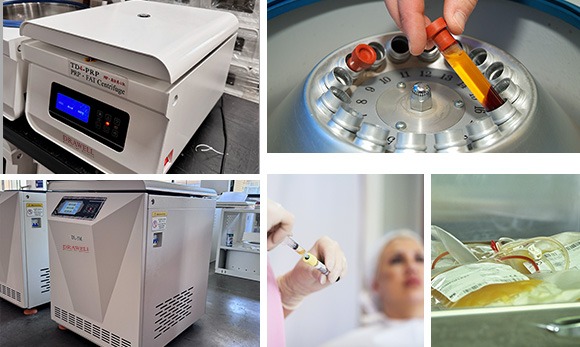
Quick Guide: When to Centrifuge and Expected Outcomes
When processing samples, centrifugation should be employed whenever phase separation, pellet formation, or particulate removal is required to proceed with downstream assays Lab Alliance. The technique clarifies supernatant from debris, concentrates cells or macromolecules into discrete pellets, and separates immiscible phases for clean collection.
Practitioners gain predictable outcomes: clearer analytical signals, reduced interference, and efficient recovery of target fractions. Decision points include sample composition, desired fraction (pellet versus supernatant), and acceptable loss.
Visual inspection and simple assays confirm success: transparent supernatant, compact pellet, or distinct phase layers. This guidance empowers operators to choose centrifugation as a precise tool that increases experimental autonomy, reduces contamination risk, and streamlines workflows without imposing unnecessary constraints on method selection.
Set Speed, Time, and Temperature: RCF/RPM, Run Time, and Temp Tips
Although ideal centrifugation depends on sample type and downstream goals, operators must set three interrelated parameters—relative centrifugal force (RCF) or revolutions per minute (RPM), run time, and temperature—to achieve reproducible separation.
RCF/RPM determines sedimentation efficiency; users calculate RCF for rotor radius and select RPM that yields required force while protecting delicate analytes. Run time balances complete pelleting against unnecessary exposure; empirical optimization prevents over- or under-centrifugation.
Temperature control preserves sample integrity, slows enzymatic activity, and stabilizes labile molecules; choose refrigerated settings when heat buildup or cold sensitivity is a concern.
Document chosen values and rationale to enable repeatability and flexibility. Thoughtful adjustments empower operators to tailor protocols confidently without compromising sample quality or downstream analyses.
Pick the Right Centrifuge and Rotor for Common Lab Tasks
Which centrifuge and rotor combination best fits a specific laboratory task depends on sample volume, required RCF, temperature sensitivity, and throughput.
For small-volume, high-speed separations a microcentrifuge with fixed-angle rotors offers rapid, compact processing; refrigerated microcentrifuges add temperature control for sensitive samples.
For larger volumes, a benchtop centrifuge with swing-bucket or fixed-angle rotors balances capacity and versatility; swing-buckets suit density gradients and clear phase separation, fixed-angle rotors increase pelleting efficiency.
Ultracentrifuges serve high-RCF needs like subcellular fractionation, requiring appropriate swinging or fixed rotors rated for those speeds.
Choose rotors and adapters that match tube sizes and balance constraints.
Prioritize ease of use, rotor interchangeability, and maintenance to preserve flexibility and reliable workflow outcomes.
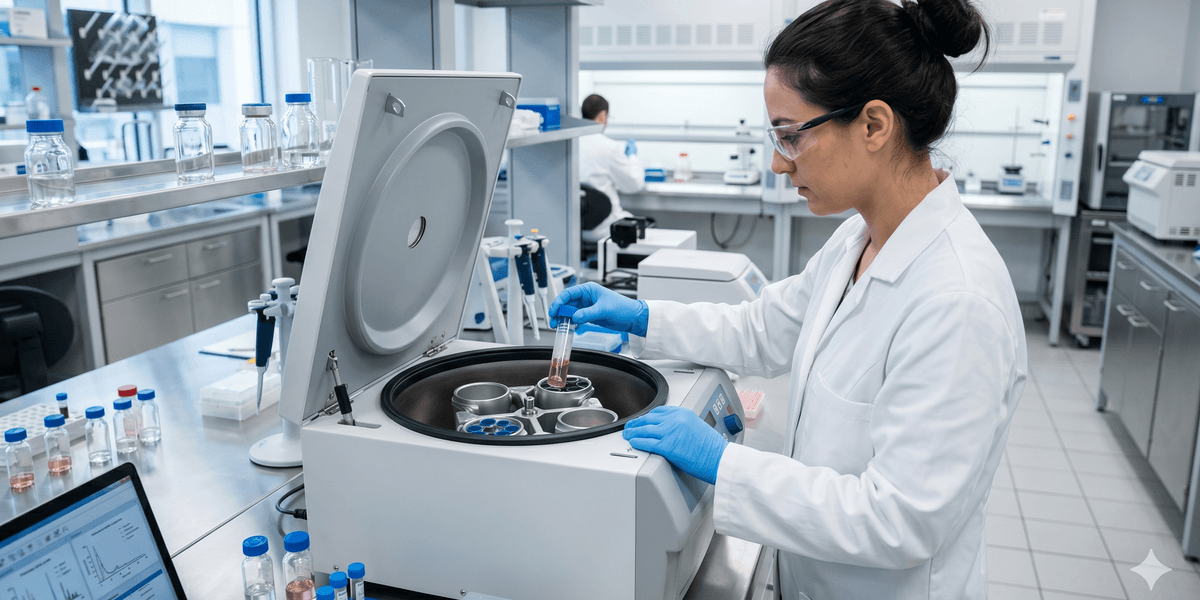
Improve Sample Quality and Reduce Contamination During Centrifugation
How can centrifugation workflows be optimized to preserve sample integrity and minimize contamination? Protocols emphasize clear separation of clean and dirty zones, single-use consumables, and pre-aliquoted reagents to limit handling.
Operators adopt gentle acceleration/deceleration settings and appropriate temperature control to prevent shearing and degradation. Balanced loading and secured tube caps reduce spills and aerosol generation.
Routine decontamination of rotor chambers, use of sealed rotors or safety cups, and validated filtration of supernatants protect downstream assays. Documentation of chain-of-custody and batch-specific controls enables traceability without constraining autonomy.
Training focuses on judgement and adaptable technique rather than rigid rules, empowering users to modify procedures safely. These measures collectively elevate sample quality while keeping contamination risks low and workflow flexible.
Common Problems and Fast Troubleshooting Fixes
Common centrifugation problems—imbalanced loads, tube leaks, unexpected temperature shifts, excessive vibration, and aerosol formation—can usually be resolved quickly with targeted checks.
A technician inspects rotor seating and sample distribution first, redistributing tubes or adding balance blanks to eliminate imbalance. Damaged or cracked tubes are discarded and replaced; seals and caps are tightened to stop leaks.
Temperature deviations prompt verification of settings, coolant levels, and pre-run equilibration.
Excessive vibration leads to rotor and chamber inspections for debris or wear, plus confirmation of compatible rotor-speed limits.
Aerosol risks are reduced by using sealed rotors, correct adapters, and careful lid operation; biosafety protocols guide cleanup.
These rapid actions restore function while preserving autonomy and workflow flexibility.
Conclusion
A lab centrifuge streamlines sample processing by reliably separating components, enhancing clarity and analytical accuracy. Appropriate selection of RCF, run time, temperature, and rotor type aligns outcomes with application needs, while strict balancing and clean technique reduce contamination and artifacts. Familiarity with common issues and swift troubleshooting preserves sample integrity and instrument longevity. Overall, judicious centrifuge use accelerates workflows, improves data quality, and supports reproducible, high-confidence laboratory results.


