
At a professional dog grooming academy, students master canine behavior and gentle handling techniques to guarantee safety and trust. They learn proper use of grooming tools adapted to different coat types and how to maintain equipment correctly. Training covers breed-specific grooming methods dog grooming class, including trimming, stripping, and detangling. Recognition of common skin issues and basic pet health awareness is emphasized. Plus, hands-on practice with various dogs builds confidence and skill. More insights on these essential grooming proficiencies follow.
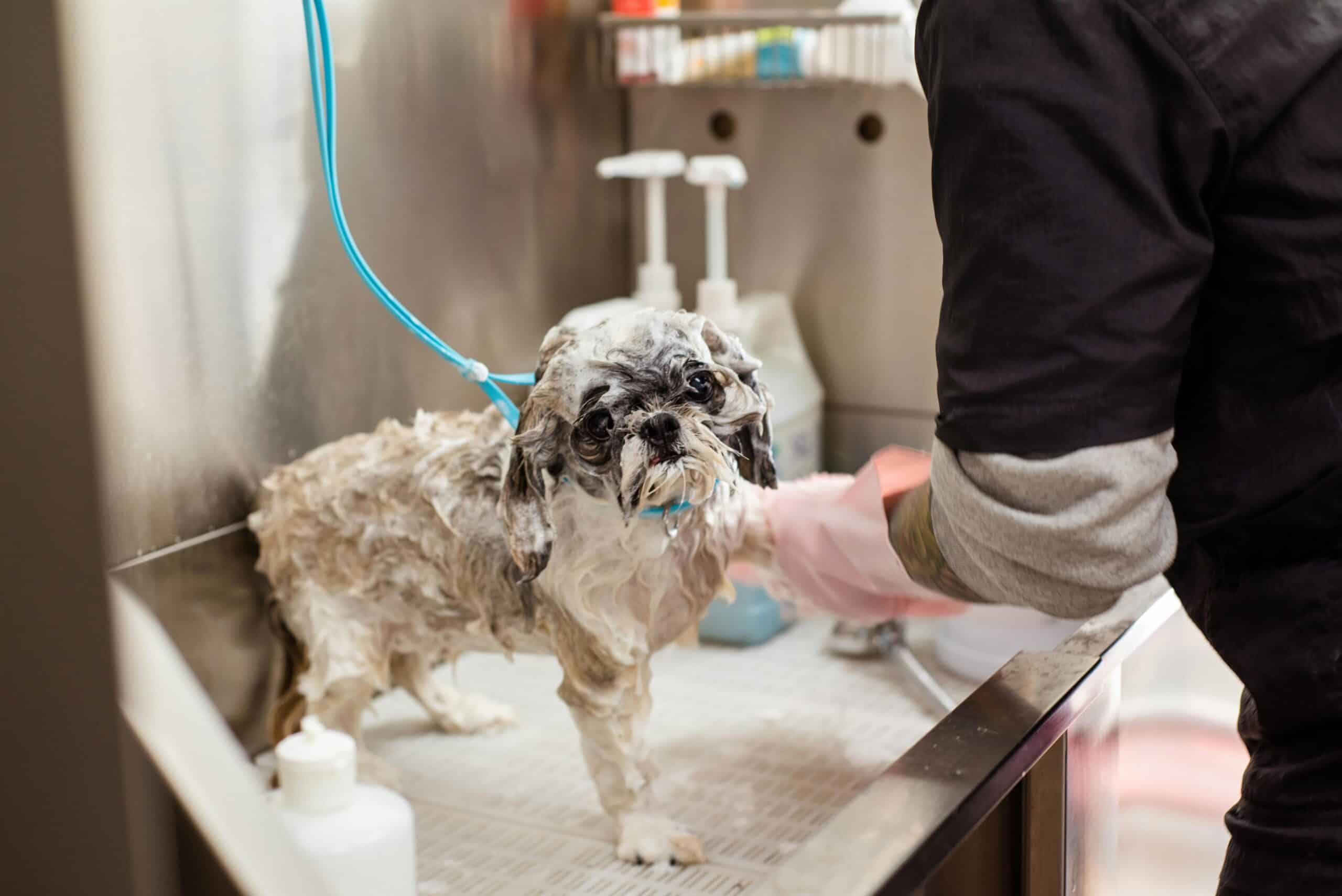
Canine Behavior and Handling Skills for Groomers
How can groomers effectively manage diverse canine temperaments to guarantee safety and comfort? Professional groomers develop keen observation skills to interpret each dog’s unique signals and reactions.
By recognizing signs of stress or agitation early https://cosmos.petuniverse.com/dog-grooming-course/, they adjust their approach to maintain calm and control. Training emphasizes gentle restraint techniques that respect the dog’s boundaries, promoting cooperation without force.
Understanding breed-specific behaviors and individual histories informs personalized handling strategies, ensuring a positive experience. This skill set minimizes risk and builds trust, allowing dogs to move freely within safe limits.
Mastery of canine behavior equips groomers to create an environment where both animal and handler feel secure, fostering freedom through mutual respect rather than restriction.
Safe and Effective Use of Grooming Tools in Training
Mastering the safe and effective use of grooming tools is essential for professional groomers to guarantee both animal welfare and grooming quality.
Training emphasizes proper handling of clippers, scissors, brushes, and combs to prevent injury and stress.
Techniques focus on maintaining control without restricting the dog’s natural movement, fostering a calm environment.
Groomers learn to select tools suited to coat type and condition, ensuring efficient grooming with minimal discomfort.
Safety protocols include regular tool maintenance and sanitation to protect both animals and groomers.
This knowledge empowers groomers to work confidently and responsibly, respecting the dog’s wellbeing while achieving precise results.
Ultimately, proficiency with grooming tools supports freedom through skilled, compassionate care rather than force or restraint.
How to Groom Different Dog Breeds: Breed-Specific Techniques
When addressing the grooming needs of various dog breeds, understanding breed-specific coat types and characteristics is essential.
Professional grooming academies teach techniques tailored to each breed’s unique fur texture, length, and growth patterns. For example, double-coated breeds require careful undercoat removal to prevent matting, while wire-haired breeds benefit from hand-stripping to maintain coat health.
Long-haired breeds demand gentle detangling and precise trimming to preserve natural flow, whereas short-haired breeds primarily need thorough brushing and skin inspection.
Mastering these methods guarantees the dog’s comfort and appearance align with breed standards. Such specialized knowledge grants groomers the freedom to work confidently across diverse breeds, enhancing their versatility and professionalism in the field.

Recognizing Skin Issues and Basic Pet Health for Groomers
Beyond breed-specific grooming techniques, a professional groomer must also be attentive to the condition of a dog’s skin and overall health. Recognizing common skin issues such as dryness, redness, infections, or parasites is essential for early intervention and to prevent further complications.
Groomers learn to identify signs of discomfort or abnormalities that require veterinary attention. Basic knowledge of pet health, including understanding allergies, infections, and how grooming impacts a dog’s wellbeing, empowers groomers to provide safer, more effective care.
This awareness supports not only the grooming process but also contributes to the dog’s comfort and freedom from distress. By mastering these skills, groomers enhance their role beyond aesthetics, becoming advocates for the pets’ health and liveliness.
Getting Real Practice Grooming Dogs at a Dog Grooming Academy
Participating in hands-on grooming sessions allows students at a dog grooming academy to apply theoretical knowledge in real-world settings. These practical experiences are essential for developing confidence and skill, as students work directly with various breeds under professional supervision. This immersive approach helps them understand dog behavior, handle pets safely, and adapt techniques to individual needs.
Conclusion
A professional dog grooming academy equips aspiring groomers with essential skills, from understanding canine behavior and handling to mastering breed-specific grooming techniques. Students learn the safe and effective use of grooming tools while gaining knowledge of basic pet health and skin issue recognition. Practical experience with real dogs further enhances their expertise, preparing them for a successful career. Ultimately, such thorough training guarantees groomers are confident, skilled, and capable of providing high-quality care.


